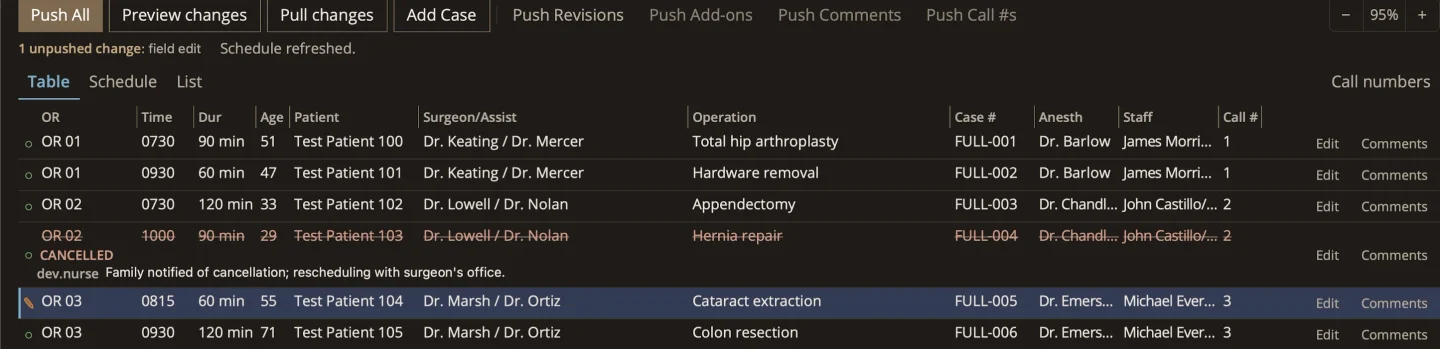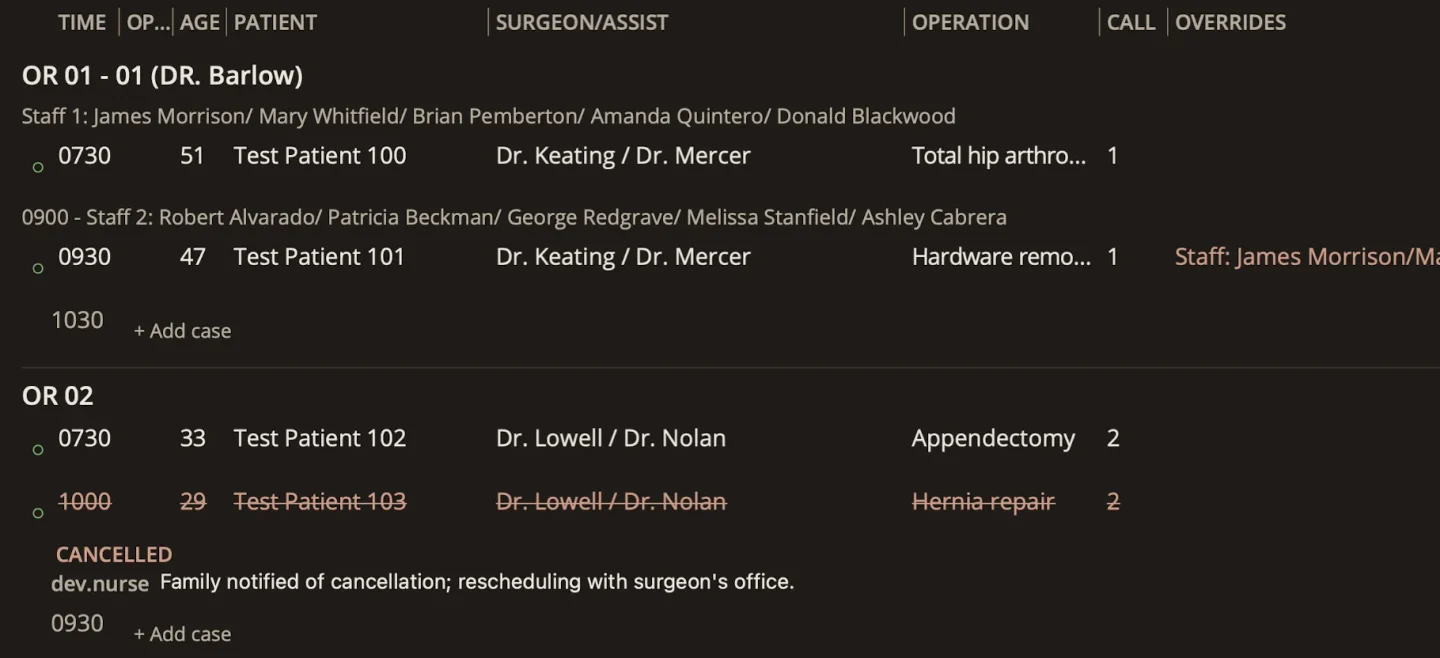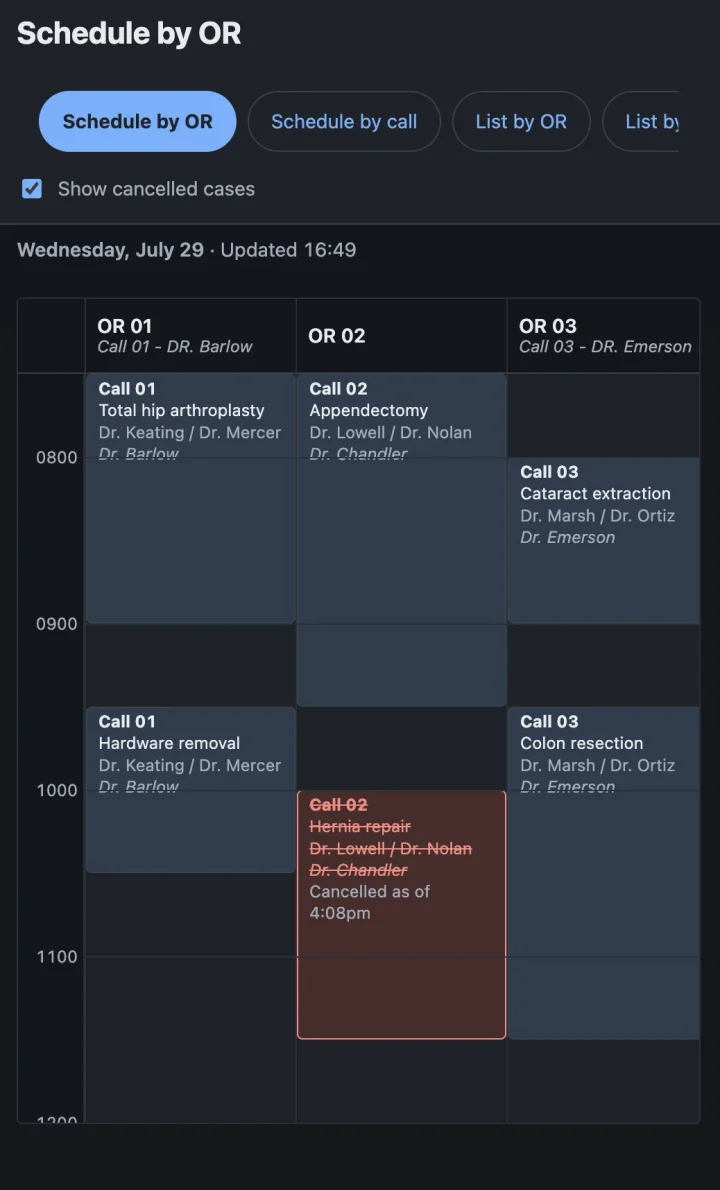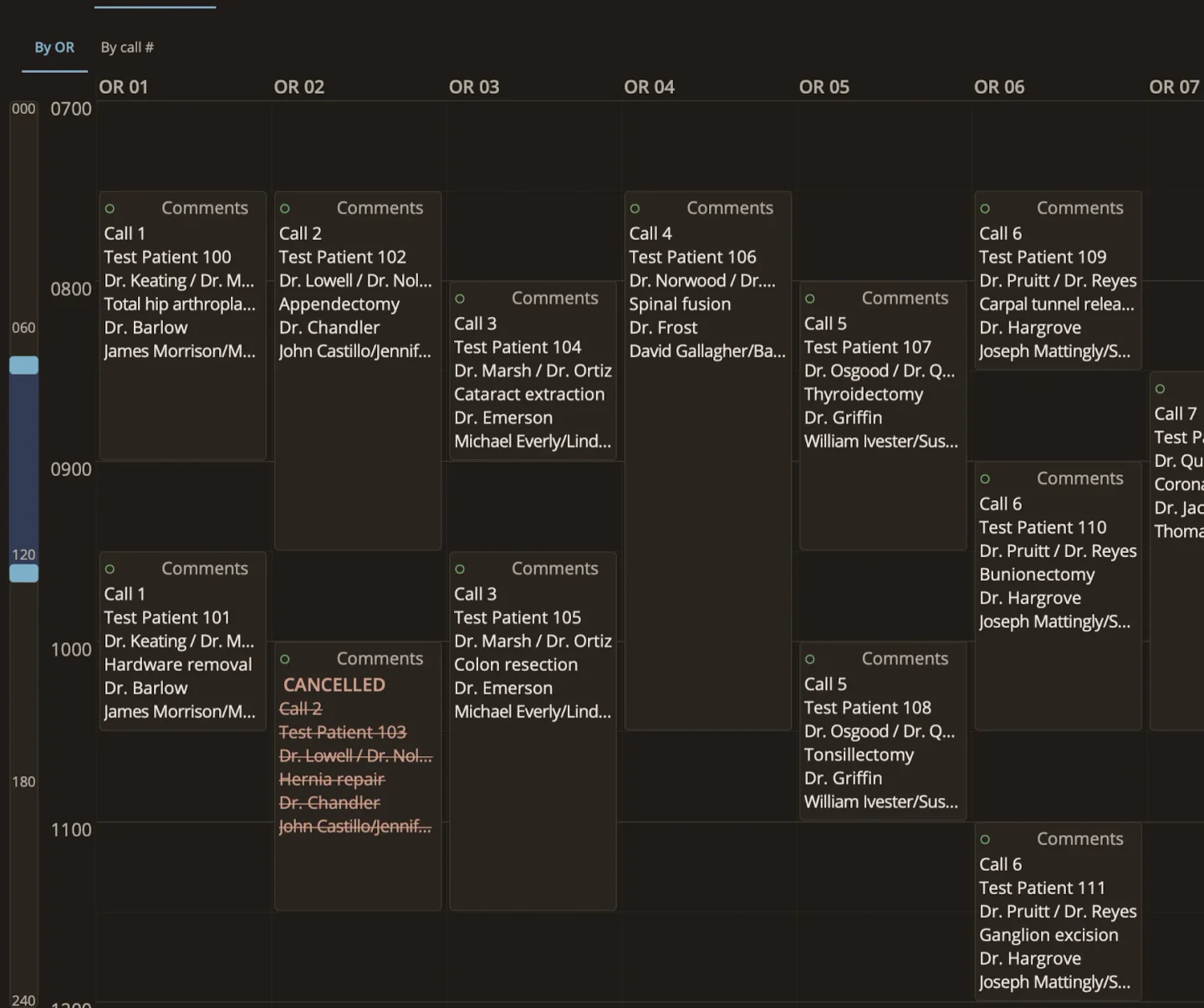
At PIH Health Whittier Hospital, the real OR schedule lives on a paper clipboard from the moment it’s extracted from the hospital database — cases move rooms, times slip, add-ons squeeze in — and none of it is visible to anyone not holding the clipboard. Clipboard digitizes that: a multi-user schedule editor (.NET MAUI) backed by an ASP.NET Core server, where nothing is ever edited in place.
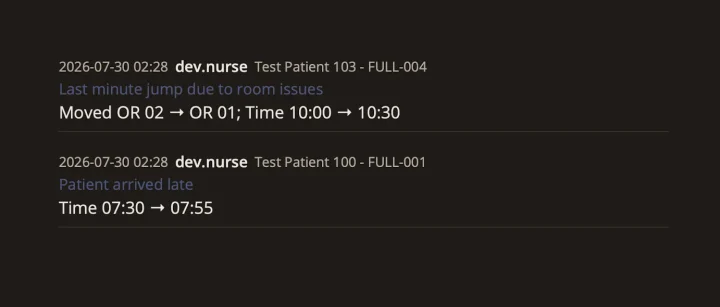
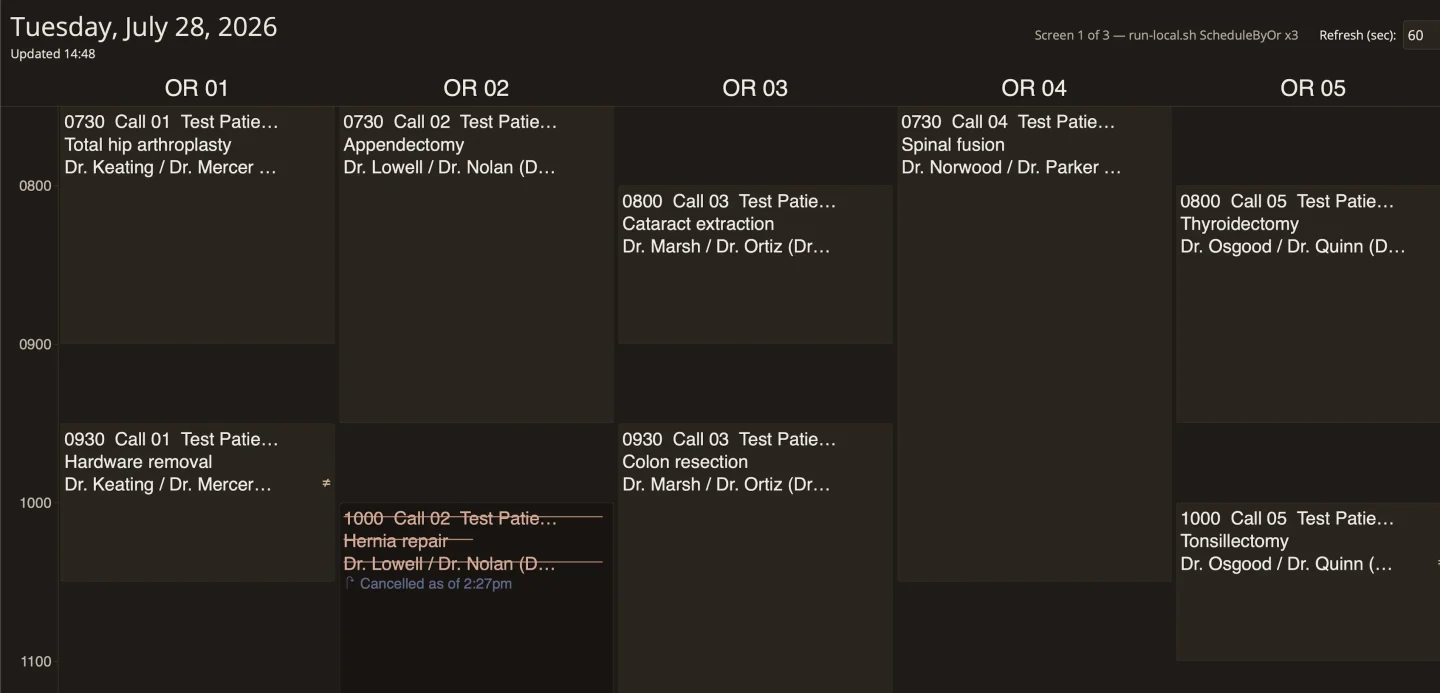
local edit → pull-first push → server-timestamped revision log → computed schedule → editors / wall display / browser viewer- Revisions, not edits — the visible schedule is always computed from the day’s base data plus every revision in server-timestamp order, and changes stay visible: a moved case leaves a crossed-out marker naming where it went, a cancelled case stays struck through on the board.
- Git-style sync — local working copies with pull-first pushes, structured merge conflicts resolved by pull/merge/override (an override is recorded as new history, never an erasure), and server-assigned timestamps and attribution on every event.
- Every surface — the same app boots as a read-only wall display that tiles across multi-screen groups with absolute fit (no scrolling, no shrink-to-fit), and the server hosts a zero-install browser viewer for any device on the hospital LAN.
- PHI by design — no internet connection anywhere: hospital-network-only, patient data trimmed per surface, and a headless client core that keeps the logic under a 3,000+ test xUnit suite.